
reviewed by Paul Knobloch for READER VIEWS


READER VIEWS
General Fiction LITERARY FICTION SHORT STORIES, NOVELLAS & GRAPHIC NOVELS WOMEN’S FICTION
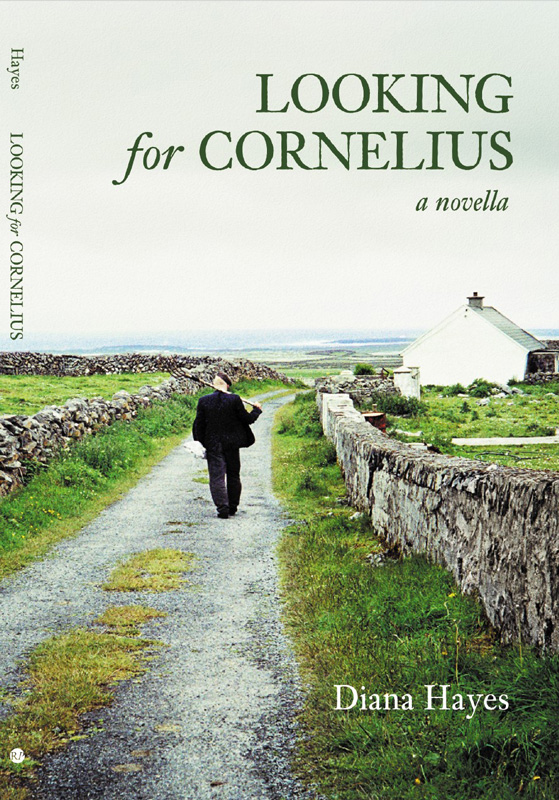
Looking for Cornelius
Diana Hayes
Resource Publications (2025)
ISBN: 979-8385250332
Reviewed by Paul Knobloch for Reader Views (08/2026)
Diana Hayes’s Looking for Cornelius follows Deirdre, a Montreal music teacher who travels to Ireland with Éamon, her gifted thirteen-year-old fiddle student, as he competes for a scholarship at Cork College University. For Éamon, the journey represents an extraordinary opportunity to turn his musical talent into a future. For Deirdre, however, Ireland offers something more personal. Orphaned at twelve when a fire destroyed her family home, she has spent years searching for information about her great-grandfather, Cornelius Ó hAodha, a Traveller from West Cork who survived the Great Hunger and eventually disappeared into the uncertainties of family history. What begins as a musical journey gradually becomes a search for ancestry, belonging, and the ways the past continues to live within us.
Deirdre and Éamon make appealing traveling companions partly because their histories quietly mirror one another. Éamon’s birth mother, Lily O’Connor, was unable to care for him because of addiction and poverty, leaving him to be raised by a loving Polish foster family. Deirdre similarly grew up in foster care after losing her parents, grandparents, and sisters in the fire. Both therefore understand what it means to live with missing pieces in their family histories. Their relationship initially appears to be that of a devoted teacher and exceptional pupil, but Hayes gradually suggests that their connection may run considerably deeper.
Music provides the first clue. Éamon possesses an almost uncanny ability to absorb traditional Irish music, playing flawlessly by ear and instinctively understanding its rhythms and ornamentations. Deirdre recognizes something ancient in his playing because she experiences much the same connection through her own fiddle. When Éamon earns the chance to perform in Cork, their trip takes them through an Ireland where music, history, landscape, and memory continually overlap. At Glendalough they encounter the legends of St. Kevin; at Cashel, Deirdre tells Éamon the tragic story of Little Nellie; and at Cobh and Spike Island they confront histories of emigration, imprisonment, religious institutions, and suffering.
Hayes does not treat these places simply as tourist stops. Each becomes another layer in Deirdre’s attempt to understand her own losses. Her private grief increasingly merges with Ireland’s collective memory, particularly when their travels bring them closer to Skibbereen, one of the areas devastated most severely during the Great Hunger. The descriptions of coffin ships, workhouses, famine graves, and desperate families can be harrowing, but they establish why recovering Cornelius matters so deeply to Deirdre. She is not merely assembling a genealogy. She is trying to give a name and story to someone nearly erased by history.
The supernatural elements become increasingly important as well. Dreams, strange coincidences, music, missing objects, and mysterious figures suggest that Cornelius himself may be guiding Deirdre toward the answers she seeks. Hayes wisely leaves enough ambiguity around many of these encounters to allow them to function simultaneously as ghost story, ancestral memory, and spiritual experience. At the Drombeg Stone Circle, Deirdre and Éamon encounter an old man who mysteriously knows their names and tells them that his wake will occur in Skibbereen two days later.
That promise leads to the novella’s emotional centerpiece. At a traditional wake honoring the famine dead, Deirdre receives a box discovered near an old hearth and bearing Cornelius Eoin Ó hAodha’s name. A mysterious man in a gray suit then reads Cornelius’s recovered letter, finally giving voice to the ancestor Deirdre has pursued for years. Cornelius recounts surviving the famine, escaping to Britain, losing his first wife and child, rebuilding his life, becoming involved with Irish nationalism, suffering a brutal attack, and ultimately returning to Cork to die. His story transforms the historical tragedy surrounding Deirdre into something intimate and human.
Meanwhile, Éamon learns that his extraordinary recital has earned him the Cork scholarship. On the return journey, Deirdre opens Cornelius’s box, where his diary and other belongings provide the final pieces of the mystery. What she discovers brings her search for Cornelius together with Éamon’s mysterious connection to Irish music in a satisfying and unexpected way.
This revelation brings the novella’s themes neatly together. Records can burn, families can scatter, names can disappear, and entire generations can be buried without markers, yet something survives—in stories, music, objects, landscapes, and people. Looking for Cornelius is ultimately less about finding one long-dead ancestor than discovering that belonging can persist despite tremendous loss. Deirdre goes to Ireland looking for Cornelius and finds not only him, but a living piece of the family she believed had disappeared forever.







 this is the most beautiful book I have yet held in my hands. You may know, since we have shared a marvellous publisher, and much west coast sensibility through the years, that I have certainly seen and read some truly glorious books already. Including those so special due to their sheer simplicity in serving the poems, their margins, type, illustrations, their endsheets, their care and contribution to poetry, all attentiveness, especially poetry by Canadian women.