
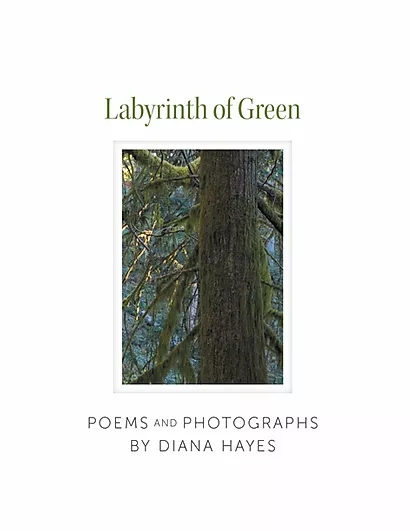
It has been a while since I revisted the poems in my earlier collection, Labyrinth of Green, published by Plumleaf Press. The books arrived just before the pandemic which made it impossible to carry through with my plans for a launch tour. There was just enough time to launch here at the Salt Spring Island Public Library as well as events in Nanaimo and at Vancouver’s Twisted Poets before everything shut down. I still have copies available, but the book is now essentially out of print. Reach out to me directly if you would like to order a copy directly from me.
Here is the CANREADS review:

info@canreads.ca | www.canreads.ca
| Labyrinth of Green by Diana Hayes, Plumleaf Press Sometimes the wildest labyrinths only lead us back to ourselves. Labyrinth of Green by Diana Hayes is a thoughtfully curated collection of poetry and photography that embraces reflection over resolution. Rather than following a conventional narrative,Hayes guides readers through grief, memory, belonging, healing, and humanity’s relationship with the natural world. As such, the collection becomes a marvellous invitation to look inward as much as outward. Its five-part structure mirrors the labyrinth’s inward journey. Readers first enter the forests and wetlands of Hayes’s Salt Spring Island home before travelling through adolescence, ancestral histories, death, grief, dream, and spiritual awakening. Stand-out poems such as “A Moment’s View,” “Miles for Millions and The Boxer,” and “House of the Grandmother” ground these larger themes in intimate experiences of place, identity, resilience, and home. One of the collection’s most compelling features is its photography. Carefully chosen images of forests, flowers, coastlines, birds, and landscapes provide moments of visual grounding between the poems’ more abstract reflections. Together, they create an uniquely immersive reading experience, offering quiet moments of consideration before readers continue through the collection. The seamless partnership between poetry and photography leaves a lasting emotional impression, encouraging ongoing contemplation. Hayes’s natural imagery is particularly evocative. Forests become places of refuge and self-discovery; birds carry grief, freedom, and transformation; water connects memory with renewal. As Hayes writes, “Poems connect us. They are ambassadors when grief blinds us,” while another moving passage reflects, “Home is where the heart lives. We may search for restless decades for this one soulful place.” In Hayes’s hands, the natural world becomes both a map of memory and a pathway toward healing. Labyrinth of Green’s greatest strength is also its central challenge. Hayes frequently employs uncommon vocabulary, niche references, and layered symbolism that invite careful interpretation. References such as the “medivac bird” reward close reading but could feel elusive for those unfamiliar with the symbolism. The contextual introductions and extensive notes offer helpful guidance, though some poems may require considerable reflection before their emotional significance fully emerges. Readers who enjoy poetry that invites multiple interpretations will likely appreciate this complexity, while those seeking immediate clarity may occasionally feel distanced from the work. Readers who appreciate reflective, nature-inspired poetry such as Mary Oliver’s will find much to admire here. Hayes transforms forests, memory, and grief into landscapes readers can wander through, discovering something new with every return. Beautifully photographed and deeply reflective, Labyrinth of Green is a meaningful collection to savour rather than rush through—one that rewards patience, reflection, and repeated visits. —CANREADS BOOK REVIEW |