THE MUSIC OF STEEL: PRAIRIE ELEGIES
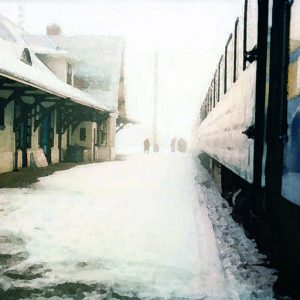 “The music of steel came with ease and regularity in the life of the railways. You could hear it from miles away. You could see the puffs of smoke that accompanied the music. It happened at every crossing, at every bend in the road, at the approach of every town and hamlet along the way… Trains talk. The sweet music of the train whistle was surely a sign of the deep bond that existed between farm folk and train crews all over the west,” wrote my father, in his book about life on the Canadian Prairies, ‘Where Did You Come From?’ The railway was what linked families and farms and provided employment for many pioneers. It was an integral part of growing up in isolated prairie communities.